"GUKURAHUNDI RE-VISITED!"

This blog looks after the debates relating to that period of Zim History where our brothers and sisters in Midlands and Mandebeleland suffered under the yoke of ZANU-PF and its 5th Brigade etc. Refer: mufarostig@yahoo.co.uk Cell: 0791463039 RSA.

THE GUKURAHUNDI MASSACRES!!!

Loading...

UK Web Hosting
Custom Search

PROF KEN MUFUKA CRITICALLY LOOKS AT THE ZIM CRISIS!

“OUR CHALLENGE AND OUR LEGACY”

“................................The atrocities in Matabeleland started in 1981 and ended 1988. Only the Catholic Commission for Justice and Peace raised the issue publicly.

My thesis in this paper is that these extra-judicial activities consumed the greater part of the Zimbabwean Government until 1998 to the exclusion of Economic Planning...............................................”

Prof Ken Mufuka.

FOR MORE PLEASE CLICK BELOW!
http://bobchargesheet.blogspot.com/2008/04/prof-ken-mufuka-looks-at-zim-crisis.html

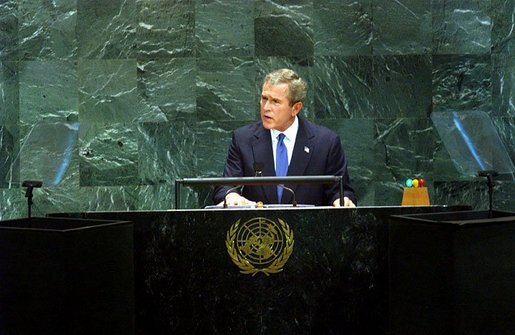
REV M S HOVE'S OPEN LETTER TO PRES G W BUSH!!!!

REV M S HOVE\
Please click on picture to get to letter!

Smith predicted Gukurahundi.....

Snap Shots

Get Free Shots from Snap.com

PLEASE CLICK JUST BELOW THIS PICTURE TO SEE THE VIDEO TAKEN AT THE VERY TIME OF "GUKURAHUNDI."
Monitor page
for changes
    
   it's private  

by ChangeDetection

Map IP Address
Powered byIP2Location.com

ADVERTISERS PLEASE SUPPORT US!

PLEASE KINDLY CLICK ON THE "COUNTERS" AND YOU WILL GET TO A PAGE WHERE YOU WILL SEE THE DETAILS OF THE VIEWERS OF THESE 15 BLOG-SITES! THE WHOLE WORLD VIEWS "ZIMFINALPUSH"! PLEASE KINDLY SUPPORT THIS EFFORT AND ADVERTISE! CONTACT mufarostig@yahoo.co.uk FOR YOUR SUPPORT! ZIMFINALPUSH STAFF!
MP3 music download website, eMusic
Why Join?
eMusic 25 free downloads
Start your free trial

Start downloading your FREE MP3s today and take two weeks to decide if you like eMusic. If you're not 100% satisfied simply cancel before your trial period ends and you'll never pay a dime. Keep the 25 FREE MP3s as a gift just for checking out eMusic.

Start your free trial
Click here to unsubscribe Privacy Policy | Terms of Use

© 2006 eMusic.com, Inc. All rights reserved. iPod® is a registered trademark of Apple Computer, Inc. Apple is not a partner or sponsor of eMusic.com, Inc.

Gostats

Technorati profile

technorati link

Add to Technorati Favorites

Previous Postings Archived Monthly!

Tuesday, January 8, 2008

NDEBELE BROTHER GIVES VERY SAD PERSPECTIVE OF GUKURAHUNDI!


This letter was written by Qhopheni Ndlovu (qhoshi03@yahoo.co.uk )

I corrected only spellings and gramma but otherwise its exactly as it landed in my In-Box.

Rev Mufaro Stig Hove.

@@@@@@@@@@@@@@@@@@@@@@@@@@@@@@@@

I find ads posted sad for people like you to try and make money out of other people's misery.

What have you done for the victims of the killings considering that you are making a killing from the ads posted on your site. You might think that you are promoting some tribal unity or something but let me tell you the truth straight , WE THE NDEBELES DO NOT WANT TO BE PART OF ZIMBABWE ANYMORE BELIEVE IT OR NOT.

We are sick and tired of the treachery perpetuated by the Shonas day in day out we are sick of having our salaries eroded every hour you may say the Shonas are suffering too but let me tell you that our suffering dates way back to the 80s.

Take Zodwa for example, her father left home when her mom was still pregnant to join the war came back at independence and in 1982 was collected at night by the fifth brigade and was never to be seen again the result is that without a father Zodwa's mom had to struggle to raise her, pay her fees and Zodwa went to school barefoot, was not doing well as there was not enough food at home; they were living like destitute in a country whose independence Zodwa's dad had sacrificed his life.

Because Zodwa has no father she cannot get a Birth Certficate and ID and in turn no Passport to escape the poverty and live in the UK like you so she can send money back home for her parents. She turns to the local eligible man, gets married and thats the end of the story of her youth. Now she has to fend for her kids who in turn (because she has no Birth Certificate) find it hard for them to get them themselves and they drop out of school at Grade 7 because they can not write Grade Seven exams with no Birth Cerficates, and yes the cycle continues vicious as it is and the next thing the boys who lost a grandparent border-jump into SA.

IF LUCKY THEY MAKE IT; if not they are either eaten by crocodiles or are caught and sent to Lindela.

On the flip side here's a boy in Mash East who grows up with with his mom as his dad has left to join the war dad comes back, gets his demob pay; is senseless, blows it all but is able to get his son a Birth Certificate and son gets an education up to Form Four. Son does not do well at school but as the crunch time comes in, son gets a passport, dad sells some of his cattle son goes to the UK starts a new life, sends dad some money and amongst other things dad buys his cattle back. Its not a blessing to have a father. Or should i say not having a dad is curse?

The sun is setting: the old guard is going; no one is man enough to stand up and challenge the old guard but need i reminder you and your likes in the words of Malcom X

"When you let your chickens out in the morning do not expect them to roost in your neighbour's run: they will come to yours."


Here I was just highlighting to you how deep our problems with the Shonas are; so whatever you are promoting as long as it does not benefit the victims directly you are just as bad
as Mugabe and Chiyangwa: you are enriching yourself with the suffering of others; you hands are blood-stained.

I have attached a link below just to give you an insight as to who the dissidents were, if a notebook signed by Notalks Mabhena is found in the pocket of a terrorist called Mombi Macheni, the rest is food for thought.

www.rhodesia.nl/mission.htm


Have a good day!


@@@@@@@@@@@@@@@@@@@@@@@@@@@@@

PLEASE VISIT SITE WHERE THERE IS A MOST HEATED DEBATE ON "GUKURAHUNDI". @@>>LINK<<@@

Thursday, December 6, 2007

Retired Bishop honoured for exposing Gukurahundi

LINK!!!
Ezekiel Chiwara 03.DEC.07

A RETIRED Roman Catholic bishop who was one of the first people to expose the massacre of 20 000 civilians in Matabeleland and the Midlands, Henry Karlen was on Friday given the prestigious Civic Honour by the Bulawayo City Council for helping victims of the government's military campaign.

He was bestowed with the honour at a function where Bulawayo mayor, Japhet Ndabeni Ncube also gave civic honours to the late Carl Paul Pretorius, a renowned soccer referee and Amratbai Desai who gave financial support to parties led by the late Vice President Joshua Nkomo during the liberation struggle.

Karlen, who was the first Archbishop of the Bulawayo diocese in 1994 alongside his successor, Bishop Pius Ncube are credited for bringing the killings to the attention of the international community.

The bishops confronted the then Prime Minister, Robert Mugabe with evidence that the Fifth Brigade, a specially trained forces of the fifth brigade deployed in the provinces to fight ‘dissidents’ were carrying out a campaign of torture, rape, starvation and murder against the civilian population.

This was after they carried out an assessment of the situation in Matabeleland North and South provinces between 1983 and 1984.

“Archbishop Karlen was a Bishop in Bulawayo at a time of the disturbances in Matabeleland in the early 80s. He went out of his way and at great personal risk to his own life to assess the situation in Matabeleland North in 1983 and in Matabeleland South in 1984 and to offer help to the beleaguered people in the two provinces,” read the citation for the honours.

Bishop Ncube was forced to resign a few months ago after a government sponsored operation allegedly caught him having an affair with a married parishioner, Rosemary Sibanda. Sibanda’s husband, Onesmus is now suing Bishop Ncube for Z$15 billion for alleged adultery.

Karlen was born in Switzerland in 1922 and taught in various Roman Catholic Church seminaries in Europe and South Africa before relocating to Zimbabwe in 1974. He retired as the Archbishop of Bulawayo in 1998 and is now involved in a number of charitable activities in the city.

Mugabe described the Gukurahundi killings as “a moment of madness” but 20 years after they ended, victims are yet to receive any compensation.

Monday, September 3, 2007

Tracing the last days of Look-out Masuku!

LINK!!!
sundayview by Judith Todd

IN mid-March, my parents invited the Shamuyariras to dinner. Halfway through, Nathan said: "Judy, I hope CIO is not still interfering with your mail?" I had to think on my feet, as it were, although I was sitting down.

What worried me was any possible fright to my mother, so I tried to pass his question off as a light-hearted matter and said: "Minister, I haven’t told my mother about this, but everything seems to have led to vastly improved relations with the CIO, and Mr Stannard and I are even due to have lunch with each other."

The minister seemed amused, and my mother and the two New Zealand visitors seemed unperturbed. I supposed, sitting warmly around the table, the possibility of the CIO opening my mail seemed unreal to everyone but the minister, my father and me. But of course, whatever I hoped, my mother would have known exactly what was happening. Her sensitivity was ultra acute.

Now and again, I thought I had reached the age and the condition when nothing was so bad that it could shock me. That particular thought was in my mind on Monday 24 March when Michelle Faul rang to say that we must meet, which we did high above Harare on the Meikles Hotel pool deck at lunch time. She worked for Associated Press and was a stringer for the BBC.

Four days earlier, Michelle had been instructed to meet Nathan Shamuyarira. She was told that "we" are tired of her reporting; she would have no further assistance from the ministry — which meant she would lose her accreditation. She couldn’t be deported, as she was a citizen by birth of Zimbabwe, so the only way to deal with her was detention at Chikurubi.

She was rightly very frightened, and at the same time ashamed of being scared. She was leaving Zimbabwe within the next 48 hours, deprived of her home, her right to work and, basically, of her citizenship.

After our painful lunch, I got back to the office to find a white woman of about 60 who asked if I could spare a few minutes. Between Michelle and now this lady, I realised that there were still things that could profoundly shock me.

She sat down, introducing herself as Margie Schwing, and although she never actually wept, she was on the verge of tears and struggling for control throughout the awful story she told me. She had been in Park Street in November, and all of a sudden was surrounded by five men who said they were from CIO and took her off to Harare Central police station. From there she was moved to Chikurubi Women’s Remand Section. She appeared once in a magistrate’s court and the CIO opposed bail because they said they were still investigating fraud.

From what Mrs Schwing said, it was CIO throughout, and not the fraud squad. She said she still didn’t know why she had been held. She was released at the end of February, suffering from pneumonia, and was taken to Parirenyatwa Hospital outpatients. Due to one of those strokes of good fortune, Mrs Schwing had been alone when a member of her church saw her and came to ask what was wrong. She was accompanied by two CIO agents, one of whom had gone to get her prescription filled, while the other had gone to the toilet.

The friend was extremely practical and whipped out a notebook, and took down the name and address of Mrs Schwing’s son, who apparently worked for Tabex in Malaysia, and then darted off before CIO reappeared.

The conditions she described were terrible: women not knowing of any rights they might have; beatings by wardresses; people having their hair torn out; a woman having teeth punched in; the use of hosepipes on prisoners by the wardresses; malnutrition among toddlers and babies picked up with their mothers. She said that on New Year’s Day as the women came out of the cell blocks, they each received a blow with a hosepipe and the accompanying greeting: "Happy New Year!"


Mrs Schwing also said something that I thought might be the truth of the matter, although she apologised for saying it, because, she said, it sounded so unreal. She had been at a party before her detention, and Simon Muzenda was there. He had been very nice to her, and introduced her to a lot of people. Mrs Schwing heard a young man, who seemed to stay close to her all the time at the party, saying to someone else: "It’s just not fair! I’m also in business. Why doesn’t Muzenda introduce me to all these people?"

So, she said, it may have all started with jealousy. To me, that didn’t sound unreal.

On Tuesday 1 March 1986, Lieutenant General Lookout Masuku and the veteran PF Zapu politician Vote Moyo were officially released from detention. As was the case under the Smith regime, the names of detainees could not be published, so there hadn’t been news of them in the papers for the four years they had been imprisoned in Zimbabwe under Robert Mugabe. Now their freedom was headline news.

Lookout’s wife Gift managed to get permission for me to see him on Sunday 9 March from 3.30PM to 6PM at Parirenyatwa Hospital. There were four heavily armed soldiers outside his room. I sat down with them, and said I gathered they had a permit for me to see Masuku. They were perfectly pleasant and said that was fine, so I walked into the private ward.

Lookout was attached to two drips but sitting up in bed, and he gave a small scream when he saw me, jumped up and hugged me hard. The drips were suspended from a wheeled stand, so he was mobile.

There was no awkwardness. It was as if we had known each other for years and had seen each other yesterday. But the joy was precisely because we hadn’t seen each other for more than four years, and because it was so wonderful to see one another again. I couldn’t begin to fathom the hell of uncontrolled suffering he had been going through. There were some days he had no memory of, which was probably just as well. The full story would probably never unfold, but if it did, it would be bleak. For example, it turned out that the "specialist" the prison authorities had told his lawyer he had seen in December was neither a specialist nor even a registered doctor.

I wondered, too, about the doctor at Chikurubi. I had learned he was a Russian Jew on contract, that he had worked previously in Israel and that he was very timid. I wondered if he had ended up in his position because he had such good qualifications.

We talked non-stop, an interested guard listening in the corner, until after six, when the soldiers very reasonably asked me to leave, as visiting hours were over. That was sad, because we didn’t then think we would be seeing each other again in the foreseeable future.

I rang Gift the next day to thank her, and to say I’d had a wonderful time. Of course, "wonderful" was the wrong word. Lookout was skinny and his arms were very swollen from trying to find veins for the drips, and he was very, very sick. But he sat up all the time I was with him and was mentally as bright as a button. There was a heart-rending moment when he said: "But what of the future? When I went to prison I got high blood pressure. Then I got kidney troubles. Now I have this. What is going to happen to me next?

I said: "Oh Lookout!" as though, how could he ask such a question?

But he said: "No, Judy, I mean it. Let’s be practical about the whole thing."

I feared he was absolutely right. I had been consulting Professor Noel Galen, who was very gloomy about Lookout’s future.

Late on Monday night I returned a call from Gift.

"Have you heard anything?" she asked.

I said I had heard a rumour that Lookout was to be released. She said it was true. I said: "How do you know? Who told you? Is there a piece of paper?"

She laughed and said the fact that she was telling me meant that it was true.

She travelled up the next day from Bulawayo, and I spent half an hour with her and Lookout at Parirenyatwa. As he was now a free man, no permits were required to see him and the armed guards had been withdrawn.

At about six that Tuesday evening, an unknown man walked in and stood by the bed. Lookout was polite but cool. I kept thinking, what an odd doctor. He didn’t ask how Lookout was feeling — he just kept informing him that he would be seeing him again, the next night, in hospital, in Bulawayo.

When he left, they simultaneously said: "CIO." Then I remembered him.


*Excerpt from Judith Todd’s latest book, Through the Darkness; A Life in Zimbabwe, available from www.zebrapress.co.za.

Thursday, August 2, 2007

MORE ON "GUKURAHUNDI" from NICK WORRALL

GUKURAHUNDI REVISITED


Memories of a massacre

stand first: The Guardian's correspondent in Zimbabwe in the early 80s, NICK WORRALL, gives his exclusive first-hand account of how he broke the news of the Gukurahundi massacre in Zimbabwe.
'Dozens of small villages had been similarly attacked and hundreds - possibly thousands - of people shot dead'
'My colleagues had betrayed our confidence and agreement'
'The suffering people of Matabeleland were failed miserably by the journalists'
'The Catholic Church knew at first hand about the killings and had been giving fleeing villagers places of refuge in their churches'
It was a quiet Saturday morning in January 1983. I was sitting reading the sparse newswires, sitting at my desk in the small office I rented in Frankel House, in the centre of what used to be called Salisbury - now Harare.  There seemed little news around on this sultry day and my mind was drifting towards swimming pool and cold wine.
So, about to leave for home, I was picking up some papers when a small, oldish man, entered my office. He looked dishevelled and out of breath. He thought mine was the BBC office. I told him it was not but, sensing a bit of news, I asked him to sit down, catch his breath and tell me his story.
He told me he had rushed over from Matabeleland where something dreadful was happening and he wanted to give details to the BBC. I told him that the BBC correspondent was, as far as I knew, out of town. But if he could give me details I would see that it was passed to the BBC when their man returned. In the meantime I asked him to tell me what was upsetting him.
The story he stammered out turned my blood cold. I asked if I could come with him to his village so he could show me enough for me to give the story to my newspaper. The BBC, I said, would certainly pick it up quickly. 
There had been quite a bit of news to report - government irritation at my claim (true as usual) that Zim, suffering from severe shortages, was getting its petrol, from South Africa. Tantamount to a shameful African crime at that time. Then there had been consistent reports from Matabeleland of attacks on farmers with official blame being aimed at "dissidents".
Some attacks, including a bomb or two in Harare and another against the air force in Gweru, were being blamed on the South Africans or perhaps on disgruntled former Rhodesian soldiers who refused to live under black rule.
Apart from these Robert Mugabe had made an unexpectedly good start after his sweeping election victory in 1980. A certain amount of opposition had come from Joshua Nkomo's Matabeleland supporters, but a strong military presence in that part of the country seemed likely to quell any potential rebellion.
Most of the Zim armed forces had received training from the British army, but a curious decision, which was bound to irritate the West, brought in soldiers from North Korea to train a new element of the local forces - to be known as the Fifth Brigade. They already had the country agog after a major showing of drill, armed and unarmed combat at the capital's major soccer stadium.
I had arrived in Zimbabwe in 1981 to report for the London Sunday Times but I changed to the Guardian when I had the chance. I was fond of this great liberal paper from my days in Britain, especially since my father had been their man to report on Ian Smith's illegal declaration of independence in defiance of colonial masters Britain. John Worrall was expelled when Smith finally lost patience with his fair, but often damning, reports. 
I decided that I should not go down to dangerous Matabeleland alone but pass the news to two other British correspondents, the Reuters bureau chief and the freelance stringer for The Times. We all agreed to go down together first thing the next morning.
My informant had come from a small village some distance northwest of Bulawayo. He took us there. All that remained was a ring of burned huts, some still smouldering. There were a few women. They were obviously in mourning. As we drove in they gathered up their children and moved away. But our friend called them back and reassured them that we meant them no harm.
They told the story that two days before a troop of Fifth Brigade soldiers had driven into the village and brandished a piece of paper. They read out the names of several men, all of them local officials of Joshua Nkomo's ZAPU political party. They ordered the villagers to produce the men. When they said the men were not in the village the soldiers grabbed six villagers, male and female. These were lined up in front of a hut and shot. Huts were then set on fire and the soldiers departed.
We were shown hollow graves in which the murdered villagers had hastily been buried. And we were told that this incident was by no means a one-off. Dozens of small villages had been similarly attacked and hundreds - possibly thousands - of people shot dead. Others, they said, especially young men, teenagers, had been savagely tortured with bayonets and left to die on the ground.
We were shown two or three more villages which had suffered a similar fate at the murderous hands of the red beret-wearing Fifth brigade. We saw more shallow graves, more burned huts and more weeping women. In each case the same story was told - they were seeking Nkomo supporters and were under orders to kill them.
We were also taken to the Mpilo hospital in Bulawayo where we were told many young men had been taken suffering from bayonet wounds. We saw about 15 victims, covered in bandages over a mass of holes in their chests and stomachs. Some were clearly in great agony, others had been drugged and were sleeping. Those that could speak told a similar story - they'd been dragged away from their huts or from their work and the soldiers had repeatedly stabbed them and then left them, lying on the ground.
When we had seen enough we retired to the Holiday Inn hotel to discuss what we had observed. It was now quite late on Sunday but there would be time to write a story and file it to London by telex that night. We were of the opinion that it was important that all three of us should tell the story now - in that case we would be protected by the coverage. No-one could accuse any one of us for having made up the story which seemed to accuse Robert Mugabe and his army of mass murder. There was safety in numbers.
The next day I discovered that the Guardian had used my story on the front page. Reuters and the London Times had printed nothing. My colleagues had betrayed our confidence and agreement. I knew that it was only a matter of time before I would to pay the same penalty as my father had 13 years before.
It was nearly three months before they expelled me. I spent time trying to get others who knew full well what was happening in Matabeleland to support me from the accusation that my story had been a lie.  I travelled to Botswana where I found hundreds of refugees from Matabeleland in a camp, all of whom told similar stories of the massacre. The Catholic Church knew at first hand about the killings and had been giving fleeing villagers places of refuge in their churches. But no-one wanted to admit to the problems.
Another well-informed organisation was Oxfam who had several programmes for the poor in Matabeleland and had observed the actions of the troops. But they did not want to jeopardise their operations either.
One result of my report (which was never acknowledged by Mugabe or any other Zimbabwean official) was to have Matabeleland closed down to the press. It took more than a year before Donald Trelford made the effort for The Observer to look for himself. Not many of our colleagues have made that effort. Perhaps in future journalists might show a bit more courage when confronted with this kind of brutality. On another occasion lives might be saved. In this, the suffering people of Matabeleland were failed miserably by the journalists.
The role of the press over this dreadful issue was far from courageous, nor has it resulted in any repentance or admission of guilt and change of heart by Mugabe, himself a Roman Catholic. I shall never forget these words about his president from an embittered Joshua Nkomo during an interview: "Mugabe has dismantled everything but mantled nothing".


Wednesday, May 9, 2007

THE INTERVIEW BY THEARCHBISHOP PIUS NCUBE!

PLEASE CLICK BELOWAND SEE AND HEAR FOR YOURSELF!


The all-new Yahoo! Mail goes wherever you go - free your email address from your Internet provider.